



Introduction: Why This One Concept Quietly Runs the World
You know what’s interesting? Some of the biggest mistakes in science, engineering, and even business didn’t happen because people didn’t work hard enough. They happened because of unit confusion. We’ve all been there—mixing meters with centimeters, hours with seconds, dollars with cents. It feels small. Almost harmless.
But trust me, it’s not.
That’s where dimensional analysis steps in like a calm, reliable friend who double-checks your math before disaster strikes. Actually, it’s one of those tools you don’t fully appreciate until you realize how many errors it quietly prevents every single day.
And the best part? You don’t need to be a physicist or engineer to understand it. Not at all.
So let’s break dimensional analysis down in a way that feels human, practical, and—dare I say—kind of satisfying.
What Is Dimensional Analysis, Really?
A Simple Definition (No Jargon, Promise)
At it is a method used to understand and verify equations by checking the dimensions (like length, time, mass) of physical quantities.
In simpler terms:
It’s a way to make sure your math makes sense by looking at the units.
If the units don’t match, something’s wrong. Period.
And honestly, that alone makes dimensional analysis incredibly powerful.
Dimensions vs Units: A Quick Clarification
People often mix these up, so let’s clear it up now.
- Dimensions are broad categories like:
- Length (L)
- Time (T)
- Mass (M)
- Temperature (Θ)
- Units are how we measure those dimensions:
- Length → meters, kilometers, inches
- Time → seconds, hours, days
- Mass → kilograms, grams, pounds
focuses on dimensions, not specific units. And that distinction matters more than you might think.
Why Dimensional Analysis Matters More Than You Expect
Because Equations Don’t Lie—But We Do
Well, maybe “lie” is a strong word. But humans definitely make careless mistakes. acts as a safety net.
Here’s what it helps with:
- Catching calculation errors early
- Verifying formulas before using them
- Converting units without confusion
- Understanding relationships between variables
And honestly, once you start using it’s hard to imagine solving problems without it.
A Real-World Wake-Up Call
Back in 1999, NASA lost a $125 million Mars orbiter. Why? One team used metric units. Another used imperial units.
No joke.
A simple dimensional mismatch caused a spacecraft to burn up in the Martian atmosphere. That’s failing to be applied—not because it’s weak, but because it was ignored.
So yeah, units matter.
The Core Principles of Dimensional Analysis
Principle 1: Dimensions Must Match
This is the golden rule.
You can’t add:
- meters + seconds
- kilograms + joules
It’s like adding apples to hours. It just doesn’t work.
Every valid equation must have the same dimensions on both sides.
Principle 2: Units Can Be Treated Algebraically
Here’s where gets fun.
Units behave like numbers. You can:
- Multiply them
- Divide them
- Cancel them
For example:
Speed = Distance / Time
Units = meters / seconds = m/s
Simple. Clean. Logical.
Principle 3: Constants Carry Dimensions Too
This part often surprises beginners.
Not all constants are dimensionless.
For example:
- Gravitational constant (G) has dimensions
- Speed of light (c) has dimensions
Ignoring this is a classic beginner mistake. And yes, we’ve all made it.
How Dimensional Analysis Works (Step by Step)
Step 1: Write Down the Given Quantities
Always start by listing:
- What you know
- Their units
This alone reduces confusion by half.
Step 2: Express Everything in Base Dimensions
Convert units into base dimensions like L, M, and T.
For example:
- Velocity → L/T
- Force → M·L/T²
This step makes patterns easier to spot.
Step 3: Check Dimensional Consistency
Now compare both sides of the equation.
If they don’t match?
Something’s wrong. Go back.
Step 4: Use Dimensions to Derive Formulas
Yes, you can actually derive equations using dimensional analysis. And it feels like magic the first time.
We’ll get to that soon.
Dimensional Analysis in Physics (Where It Shines)
Example 1: Finding the Formula for Speed
Let’s say you forgot the formula for speed. No panic.
You know:
- Distance → L
- Time → T
To get speed, you divide distance by time:
Speed = L / T
Boom. Formula recovered.
Example 2: Period of a Pendulum
The time period (T) of a simple pendulum depends on:
- Length (L)
- Gravity (g)
Using , you can show:
T ∝ √(L / g)
Without memorizing anything.
Honestly, that’s powerful.
Dimensional Analysis in Chemistry
Unit Conversions Without Tears
Chemistry students know the pain of unit conversions.
Moles to grams. Liters to milliliters. Pressure units everywhere.
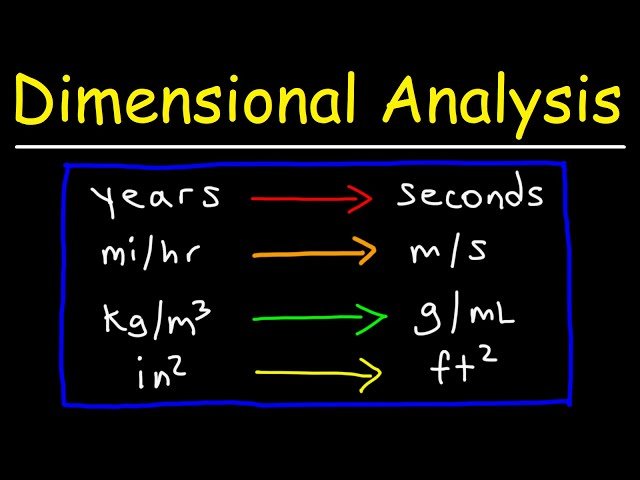
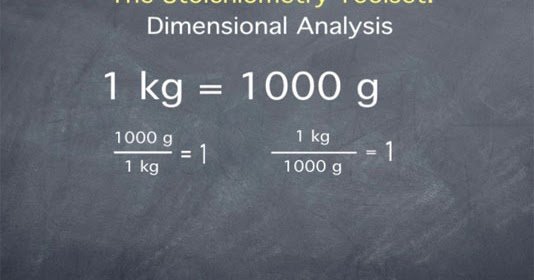
Dimensional analysis simplifies this by using conversion factors that cancel units cleanly.
Example:
500 cm = 5 m
Why?
Because:
1 m = 100 cm
So cm cancels out naturally.
Stoichiometry’s Best Friend
Every balanced chemical equation depends on ratios. And ratios rely on dimensional analysis to make sure quantities line up correctly.
No guessing. Just logic.
Dimensional Analysis in Engineering and Everyday Life
Engineering: Where Errors Are Expensive
Engineers use dimensional analysis to:
- Validate designs
- Check simulations
- Ensure safety
A tiny unit mistake can mean structural failure. So dimensional consistency is non-negotiable.
Everyday Examples (Yes, You Use It Too)
Believe it or not, you already apply dimensional analysis:
- Calculating fuel efficiency (km/L)
- Estimating travel time
- Scaling recipes
- Comparing prices per unit
You just didn’t call it dimensional analysis.
Advantages of Dimensional Analysis
Why Professionals Rely on It
Here’s why dimensional analysis never goes out of style:
- Simple and logical
- Reduces errors
- Saves time
- Works across discipline
Honestly, it’s one of those skills that grows with you.
Limitations of Dimensional Analysis (Let’s Be Honest)
What It Can’t Do
As useful as dimensional analysis is, it’s not magic.
It cannot:
- Give exact numerical constants
- Replace experiments
- Predict direction (like positive or negative values)
So yes, it’s powerful—but it works best alongside other methods.
Common Mistakes to Avoid
Mistake 1: Ignoring Hidden Units
Angles, constants, and coefficients often carry dimensions. Don’t assume they’re unitless.
Mistake 2: Mixing Unit Systems Carelessly
Metric and imperial systems don’t play nicely together. Always convert before calculating.
Mistake 3: Rushing the Setup
Most errors happen before calculations even begin. Slow down. Write units clearly.
Trust me, future-you will be grateful.
Tips to Master Dimensional Analysis Faster
- Write units with every number
- Practice unit cancellation visually
- Double-check dimensions before plugging values
- Use dimensional analysis as a habit, not a last resort
And honestly, the more you use it, the more natural it feels.
Dimensional Analysis and Problem-Solving Confidence
Here’s something people don’t talk about enough.
Dimensional analysis builds confidence.
When you know your units make sense, you stop second-guessing yourself. You trust your work. And that mindset shift? It’s huge.
Conclusion: Small Tool, Massive Impact
So, dimensional analysis might look simple on the surface. Almost too simple.
But that’s exactly why it’s brilliant.
It keeps equations honest. It saves time, money, and sometimes even lives. And once you truly understand it, you start seeing the world through units and relationships—not memorized formulas.
If there’s one takeaway here, it’s this:
Never ignore your units. They’re trying to tell you something.
And now, you’re ready to listen.
Frequently Asked Questions (FAQs)
What is dimensional analysis in simple words?
Dimensional analysis is a method used to check calculations by examining the units involved, ensuring equations make physical sense.
Why is dimensional analysis important?
It helps prevent errors, verify formulas, convert units correctly, and understand relationships between physical quantities.
Can dimensional analysis derive formulas?
Yes, dimensional analysis can help derive relationships between variables, though it can’t determine exact numerical constants.
Is dimensional analysis only used in physics?
Not at all. It’s widely used in chemistry, engineering, mathematics, and even everyday problem-solving.
